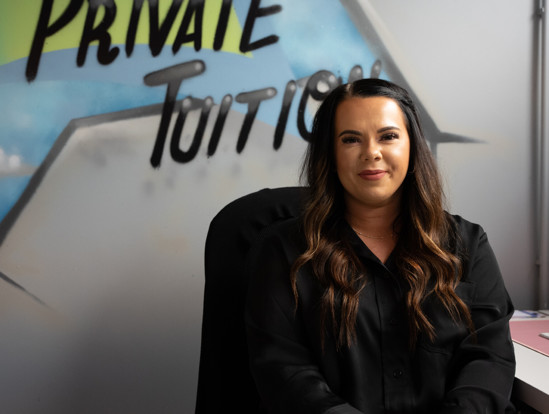
Gillian Nissim had built a career as a communications manager, working for many leading financial services companies and public sector organisations. However, when she returned to the job market after the birth of her first child, she was surprised by how difficult it was to find suitable jobs.
‘I knew what I wanted,' she explains. ‘I needed a job that used my skills and expertise, but that I could fit around my new priorities. I knew there were jobs out there – the trouble was that there was nowhere that I could go to access these jobs easily.'
Nissim (pictured top) continues: ‘If you want a job in the media, in HR or in customer services, you know where to look. There are websites and publications that specialise in those areas. The same is true of almost any segment of the employment market.
However, for the growing army of new mothers returning to work, there was no single place to find high quality, flexible job opportunities. So I decided to set one up.'
Researching the market.
Nissim made the decision early in 2005 and spent a year researching the market and developing her website: www.workingmums.co.uk. She already knew there were thousands of highly-skilled and experienced women who would use the service,
but she was particularly encouraged by the enthusiastic response from the
companies she spoke to.
‘I spoke to one-man bands and large corporates,' she says. ‘The vast majority told me they were very interested in a website like this. Most were keen to recruit mothers
returning to the workforce, and they recognised the need to offer them flexible terms. Some were attracted by the increased diversity it would offer; others by the fact that it is a highly cost-effective approach.'
Offering flexible terms to mothers, says Nissim, can make good business sense. ‘Very often they can work from home, so companies avoid the costs of office space, IT equipment and so on. Furthermore, it allows them to hire and retain good members of staff, and this reduces their recruitment and training budgets as well as having a positive effect on the productivity of the company.'
Early days
This positive feedback was enough to convince Nissim and her husband that their idea was a winner, and so in April 2006, they launched the site. Looking back three years later, Nissim believes one of the greatest challenges she has faced has been getting through those early years when they were operating on a shoestring.
‘We were working from home to keep costs to a minimum and there really was no slack in any budgets. It was challenging, but we got through it, and it taught us a great deal about controlling costs. Now that we've got some outside investment
and the site is starting to bring in significant revenue, things are a little easier, but we're still maintaining the discipline of budgeting and managing expenditure.'
She says that before the launch of her site, she received some excellent mentoring from Business Link. However, she believes it would have been very useful for that to have continued after launch. She explains: ‘We faced just as many challenges
once the site was up and running as we did before it went live, and we would have appreciated the same level of support as we received at the outset. I know it would involve government investment, but I believe it could be very worthwhile for UK
businesses.'
Surviving and thriving
It is a simple business: employers, recruitment agencies and advertising agencies buy space on the site to advertise jobs to the audience of mothers who are looking for flexible working opportunities. They pay £99.95 per month for a standard listing, up to £600 per month for banner advertising, and up to £2,000 to email a job to the entire database of more than 40,000 registered job seekers.
Nissim believes these prices represent excellent value: ‘If you go to a magazine or newspaper, you can easily pay thousands of pounds for a one-off space. If your ideal candidate happens not to read the publication on that day, you've missed them. With
our site, the ad is there for a month and candidates can search for it, so you have a much greater chance of reaching people.'
Those employers clearly agree, as 3,000 of them now advertise on the site. Last year, the company turned over nearly £500,000. Next year, Nissim aims to double that turnover. She reports that while the company has reached break-even point, this year she is investing heavily in the sales team, and so is yet to show a profit.
While many recruitment companies, online ventures and advertiser-dependent publishers are struggling through the recession of 2009, Nissim claims that, so far,
her operation has been unaffected. ‘We're in a very good position to do well through these current economic troubles,' she argues. ‘We offer a highly cost-effective solution to our clients, and as a small operation we're able to tailor our services and give them exactly what they want.'
Finding investors
The business has also been buoyed by an injection of capital towards the end of last year. Nissim describes this as perhaps the most challenging aspect of running a business that she has faced so far. She says: ‘It was very difficult giving enough attention to finding investors while also driving the business forward.'
She continues: ‘People had warned me how time-consuming it is to raise capital, but it wasn't until I went through the process that I realised. It can be very easy to shift your entire focus to re-writing business plans, meeting potential investors, performing due diligence and dealing with the lawyers, to say nothing of the emotional aspect of
it all. I had to keep reminding myself that, on top of everything, I actually had a business to run.'
She was able to balance the two priorities, and eventually found the right investors through personal contacts. Their investment has allowed Nissim and her husband to
move the operation from their home to an office in Soho. They now employ 10 people, half of whom work from the head office, and the other half work from home around the country. In this way, the company saves on office and IT costs, and is able to hire
returning mothers with the right skills for the jobs – demonstrating that the model works.
Future plans
Nissim's plan for her business is fairly straightforward. ‘We plan to grow,' she says. ‘We believe we have a model that works and a niche with plenty of potential. We've got the people and the infrastructure in place, and so expect to see significant growth in the coming months and years.'
For those who might aim to emulate her success, she has the following advice: ‘Don't be afraid of competition. If there are other companies doing what you do, it proves that there's a market for what you're selling. So, see it as a positive. Just find your point of difference from your competitors and work hard to be better than them.'
Finally, she concludes: ‘Do your market research thoroughly, but don't forget that speed to market is also important. At the end of the day you can become bogged down in endless research and planning. There are plenty of people who had the same idea as me, and the only difference between me and them is that I actually put the
idea into practice.'